

Insights from Tamarind Engineering
At Tamarind Engineering, we frequently review designs for buildings constructed with Cross-Laminated Timber (CLT). One trend we’ve noticed? Many of these designs feature flat roofs. While they may look sleek and modern, our experience tells us this is rarely a good idea.
The Problem with Flat Roofs
According to BS 6229:2018, all flat roofs should have a minimum fall of 1 in 80 after deflection, with a recommended design fall of 1 in 40. Why? Because water pooling on a flat roof is a recipe for trouble—especially when CLT is involved.
CLT is susceptible to rot if its moisture content exceeds 20%. If water penetrates the waterproofing membrane and reaches the CLT, the damage can occur unnoticed. From below, everything may look fine, while above, the timber could be deteriorating.
Our Recommendation
To mitigate this risk, Tamarind Engineering strongly advises incorporating a structural fall in CLT flat roofs and terraces. A fall directs any water that breaches the membrane toward a low point, reducing the spread and localizing potential damage. This approach can make repairs easier and limit costly surprises.
For added protection, moisture sensors are an excellent early-warning system. For more technical guidance, refer to:
- TDUK Commercial Timber Guidebook
- New Model Building Guide for residential roof fall recommendations.
Terraces and Continuity Issues
Terraces pose unique challenges, but wherever possible, introduce a structural fall. Avoid continuous CLT panels from internal to external areas—any external leak could migrate indoors, causing significant disruption.
Plant Areas: A No-Go
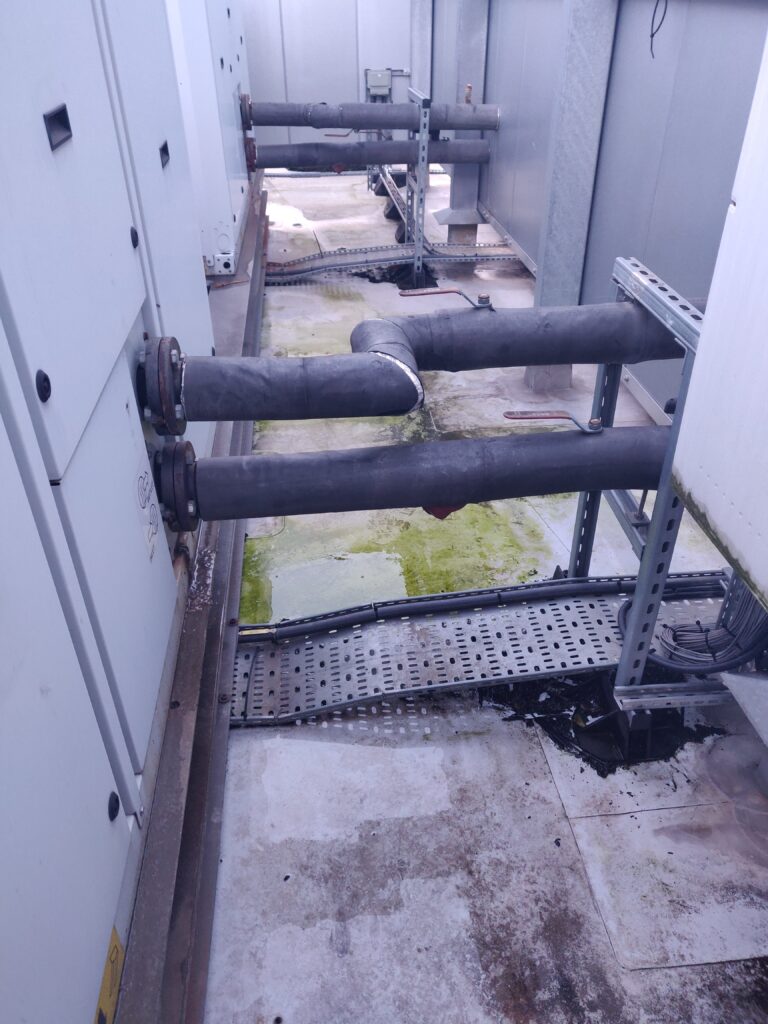
We do not recommend using CLT for roofs supporting plant equipment. These areas involve heavy traffic, complex fixings, and tricky waterproofing details—all of which increase risk.
Green and Blue Roofs: a red flag
Green and blue roofs are designed to slow water runoff, which significantly raises risk for CLT structures. Tamarind Engineering advises against using them on CLT roofs. For more on risk management, see the Mass Timber Insurance Playbook.
In Summary
Flat roofs may look appealing, but when paired with CLT, they may introduce serious durability concerns. Structural falls, moisture monitoring, and careful detailing are essential to protect your investment and ensure long-term performance.